1. Build learning objectives with your team
The motivation and focus of your team will power their learning experience, but they’ll still need your support and guidance. This involves working with them to establish concrete goals. Here are some things to keep top of mind when designing your team’s goals for their certification training:
- Do they simply need certification for compliance reasons? For instance, the Department of Defense 8570/8140 mandates that contractors with access to information systems obtain certain credentials.
- Do they need new skills for a specific project? Perhaps you’re performing a cloud migration or revamping your cybersecurity infrastructure, and the knowledge they gain will help them deliver.
- Try to use SMART (Specific, Measurable, Achievable, Relevant, Time-bound) statements. For example, “Once you’ve completed this training, you’ll be able to design a role-based access control system in an AWS environment by July 2025.”
In this way, you have clear reasons for taking the training, whether it’s for boosting their careers, upskilling or preparing for an important project. Also, once you’ve established the “why?” it’s easier to justify your training budget for decision-makers.
What should you learn next?
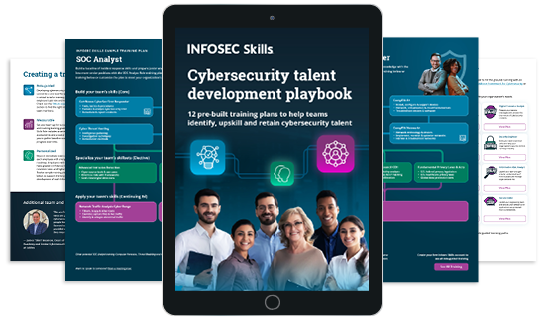
From SOC Analyst to Secure Coder to Security Manager — our team of experts has 12 free training plans to help you hit your goals. Get your free copy now.
2. Learning starts before the training begins
Enrolling in a boot camp, whether it’s a live boot camp, self-paced boot camp or immersive boot camp, is great, but that training is just part of preparing for the exam. Your team should prepare FOR the boot camp so they can get the most out of your investment.
For IT and security professionals, the good news is almost all certification exams are well-documented in terms of exam domains and objectives. You can quickly find the exact content breakdown for your specific exam with detailed explanations of what each section will cover.
There’s no need for your team to head into their exam confused or unsure of the content! For the most up-to-date exam topics, locate official exam outlines from vendors like CompTIA, ISC2 or ISACA. For example, here is the CompTIA Security+ exam outline, which includes a detailed outline of each domain, key objectives and concepts.
If needed, assist your team read through these lists and determine their strong points of knowledge — and their weaknesses. Breaking down a large certification exam into objectives and key concepts makes it much simpler to create a formal study plan and aligns their studying with the official exam outline and content as well.
Many boot camps, such as Infosec’s, come with prep materials designed to boost your team’s chance of success. By going through these before the boot camp, you and your employees can get up-to-speed on many of the key concepts — ensuring they get the most out of their boot camp training time.
3. Help them understand the exam process
Naturally, you want your team to learn new skills, but this is an exam, so they must know how to approach it. By understanding how the test works and what its designers are looking for, your team members stand a much better chance of passing on the first try. Even experienced pros can get tripped up if they’re not familiar with the exam’s format and expectations.
Not only is every certification exam’s content well documented, but even samples of the different types of questions are available online. For example, both Security+ and CISSP have multiple-choice and more “hands-on” type of questions, which CompTIA calls performance-based questions (PBQ) and ISC2 calls advanced innovative questions.
Here are the most common question types they'll find on exams:
- Multiple-choice: With multiple-choice questions, there are a series of options and only one correct answer. Common tips for tackling multiple-choice questions include looking for keywords within the answers and using the process of elimination to narrow choices down.
- Multiple-response: These types of questions have multiple answers instead of a singular choice. For multiple-response questions, make sure your answers thoroughly address the questions and try to answer the question without reading the options first.
- Performance-based questions (PBQs): Designed for more technical responses, PBQs require you to perform a task or solve a problem to answer a question. You’re given a scenario and must perform the task in a simulated environment.
Most exams only have a small number of “hands-on” or PBQs, and common strategies for these include utilizing labs and hands-on practice environments when studying to practice these simulations.
4. Learn tricks for your specific certification
Each exam is a little different and comes with different test-taking strategies. For example, the CISSP exam is a Computerized Adaptive Test (CAT), meaning that the questions adapt based on how you answer the previous questions. This means exam takers can’t go back and change answers, and some questions may feel harder than others. Also, they won’t know the exact number of questions they will get as it can range between 100 and 150.
Get your guide to the top-paying certifications
With more than 448,000 U.S. cybersecurity job openings annually, get answers to all your cybersecurity salary questions with our free ebook!
Understanding these exam expectations can help them create a solid exam strategy, but it’s also important to understand the types of answers each exam is looking for.
Steve Spearman, an expert Infosec CISSP Boot Camp instructor, recommends thinking like a manager to choose the answer with the highest order. Instead of thinking like a technician, focus on the best answer from a managerial point of view.
5. Leverage the advice of experts
The absolute most important element of exam prep is practicing the practice questions. There’s no better way for your team members to assess themselves, pinpoint their weaker areas and feel confident going into exam day than going through hundreds, if not thousands, of practice exam questions. They should find as many official, reputable practice questions as possible, and time and score themselves.
This is where having someone experienced pointing them in the right direction can be beneficial. With a training partner like Infosec, you benefit from our two decades of training tens of thousands of students.
“You should target doing at least 2,500 questions [to prepare for the CISSP exam],” explains Spearman. In the video below, he breaks down how you can get 2,000+ practice questions with just two resources.
So, how do your team members know when they’re ready to sign up and take the exam? Spearman tells his boot camp students, “You need to get 75% of the answers right in the official practice test, and it needs to be questions you’ve never seen before.”
6. Reassure your team before exam day
Like most exams, certification tests can cause at least a measure of stress and anxiety. To reduce the chances of stress impacting your team’s performance, you’ll want to clear away work-related stresses leading up to exam day. This will make it easier for them to maximize their training and have clear heads on exam day.
If someone is a night owl or an early morning person, they should take the exam at their peak performance time of the day. Gober recommends scheduling the test when you’re at your sharpest, such as in the morning if you’re a morning person or “in the afternoon if you need a little time to boot up.”
He also recommends bringing a cold drink and eating a proper, delicious meal beforehand, so you relax.
For example, Jerich Beason, Chief Information Security Officer at Epiq, tells how he failed his Security+ exam the first time. “I took the test on an empty stomach because this is how I spent my lunch break — no time to eat. I didn’t focus on wearing comfortable clothes, nor did I get a good night’s sleep.” Beason eventually retook his exam, passed and now always comes prepared with his A-game.
Remind your team that a single exam performance does not make or break their careers or define their personal or professional worth. If your team trained with a provider like Infosec, they also have an Exam Pass Guarantee, meaning that if they fail the test on their first attempt, they can get a second attempt at no cost to them. Spearman advises students, “Your worth as a person and a professional is more than how you do on your exam.”
Get your free role-guided training plans
Get 12 cybersecurity training plans — one for each of the most common roles requested by employers.
Takeaway: Set your team up for success
The biggest key to getting the most out of your investment is ensuring your team prepares thoroughly — and has the time and support to do so. Use your understanding of each employees' strengths and weaknesses to identify how you can support them, such as:
- Do they need guidance on what to study?
- Will regular check-ins help keep them on track, or are they self-motivated?
- Can you provide support within your team as they train together?
If your team members still feel anxious walking into their tests, don’t worry! Research shows that a little bit of anxiety can improve performance, but when it gets overwhelming, that’s when it becomes detrimental. Encourage your employees to approach their exams with confidence, self-belief and a growth mindset.
With the right mindset and the proper studying, exam success is within your team’s reach!