
Security awareness training in higher education: The ultimate guide

Article content
Higher education institutions face a complex cybersecurity environment and constant pressure from cyber threat actors. Verizon’s 2026 Data Breach Investigations Report documented 1,252 breaches with confirmed data disclosure across Educational Services and found a human element in 68% of breaches — reinforcing the importance of preparing students, faculty and staff to recognize and respond to cyber threats.
Key takeaways
- Security awareness programs must reach students, faculty and staff across decentralized, open environments while protecting sensitive institutional, research and student data.
- Continuous, role-relevant training helps people recognize threats while supporting FERPA and other evolving compliance requirements.
- Automation and meaningful metrics help security teams scale programs, track behavior change and focus improvement where it matters most.
Effective security awareness training is an important part of that preparation. Colleges and universities make attractive targets for cybercriminals due to their unique characteristics:
- Large volumes of sensitive data, from student records to groundbreaking research
- Complex networks serving diverse users: students, faculty, staff and researchers
- Open environments designed to promote learning and collaboration
- Decentralized IT structures spanning multiple departments and campuses
- A mix of personal and institution-owned devices accessing networks
Beyond financial impact, security incidents can disrupt classes, compromise research data and damage an institution's reputation. Security awareness training is a crucial defense, but traditional corporate approaches often miss the mark in academic settings.
Understanding behavior in academic settings

Students use laptops on campus where daily digital decisions about Wi-Fi connections and data handling can impact institutional cybersecurity.
Your academic community plays a critical role in your institution’s cyber defense. Each day, students, faculty and staff make countless decisions that impact your institution's security, from how they handle research data to whether they connect to unsecured Wi-Fi networks across campus.
"One common misconception is that if you share information and resources with people, they will all process and apply it similarly," explains Keatron Evans, VP of Portfolio Product and AI Strategy at Infosec Institute. "Everyone's logic varies, and people tend to make decisions subconsciously with the reactive side of the brain instead of the more logical side. This matters greatly when developing training for diverse academic communities."
Academic environments present unique behavioral challenges:
- Students prioritize quick access to learning resources over security protocols
- Faculty balance protecting sensitive research with sharing findings openly
- Staff handle confidential student data while managing busy administrative workloads
- Visiting researchers and guest lecturers need rapid network access
- Personal devices mix freely with institution-owned equipment
Creating lasting security awareness requires shifting from compliance-driven behaviors to genuine engagement. Rather than following security practices because "IT says so," your academic community needs to understand and value its role in protecting institutional assets and student data.

Strengthen security awareness with human risk management
Infosec HRM, powered by Right-Hand Cybersecurity, provides alert-based training nudges to minimize human risk at your organization.
Success comes from making security relevant to both academic and personal life. When people see how security practices protect their own data and privacy, they're more likely to embrace these behaviors. This connection helps transform security from an institutional mandate into a valued life skill.
Security awareness isn't about assigning blame or creating fear. It's about empowering your academic community with knowledge and confidence to make secure decisions. When people understand what to do and why it matters, they're more likely to incorporate security best practices into their daily routines on and off campus.
Benefits of security awareness training for higher education
An effective security awareness program yields measurable benefits across multiple areas of your academic institution. Beyond reducing security incidents, it helps schools meet compliance requirements, protect student privacy and build trust within the academic community.
The financial impact of a breach remains significant. IBM’s 2026 Cost of a Data Breach Report found the global average cost of a data breach reached $4.99 million, up 12% from the previous year. Organizations also took an average of 247 days to identify and contain a breach. For higher education institutions balancing complex environments and limited resources, reducing preventable risk and improving response can help limit disruption to teaching, research and essential services.
For higher education institutions, those benefits show up in three key areas: protecting sensitive data, supporting compliance and maintaining academic continuity.
Protect sensitive institutional data, including:
- Student records and financial information
- Research data and intellectual property
- Health records from campus medical facilities
- Financial aid and donor information
- Faculty and staff personal data
Support regulatory and compliance requirements, including:
- Family Educational Rights and Privacy Act (FERPA)
- Health Insurance Portability and Accountability Act (HIPAA)
- Payment Card Industry Data Security Standard (PCI DSS)
- Research grant requirements
- State privacy regulations
Strengthen academic continuity by helping your community:
- Reduce security-related disruption to classes and research
- Use online learning and collaboration tools more securely
- Make safer decisions when working remotely
- Recognize and report suspicious activity sooner
- Protect sensitive data across personal and institution-owned devices
These benefits extend beyond prevention. When students, faculty and staff understand security risks and know how to respond, institutions can improve incident reporting, reduce disruption and build a stronger security culture across the academic community.
Elements of an effective security awareness program
A successful security awareness program drives measurable behavior change that reduces risk. For higher education institutions, this means moving beyond annual compliance training to create lasting security habits through continuous engagement and reinforcement.
Understanding your institution’s current cybersecurity maturity can help identify where your awareness program is strong and where to focus next.
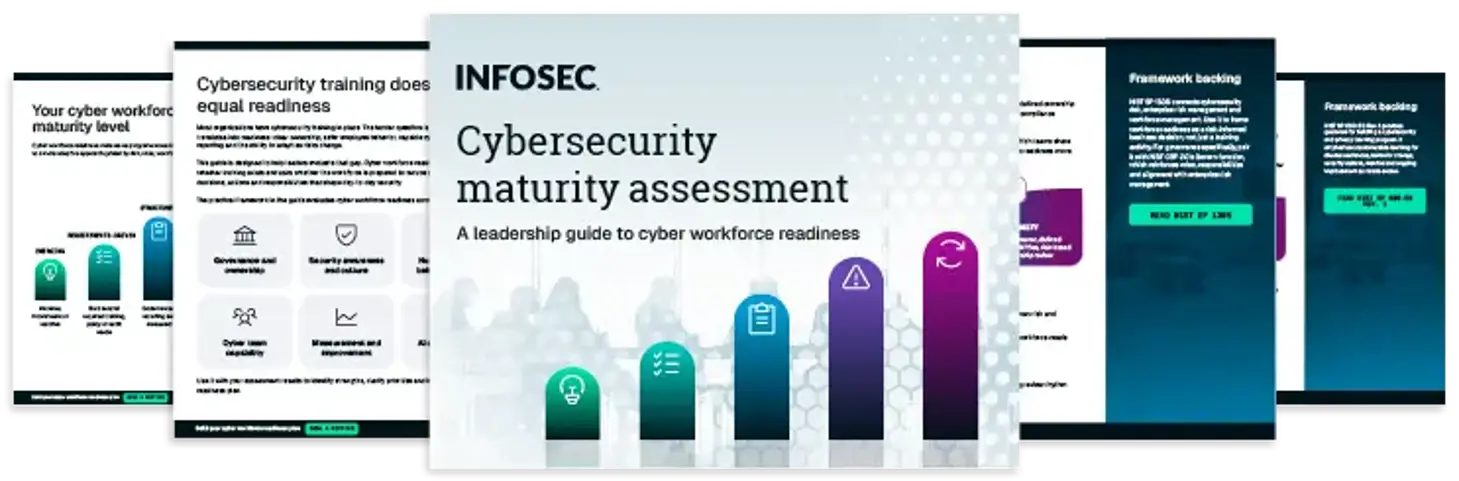
Get our free Cybersecurity maturity assessment and guide to learn more.
Program design must account for your institution's unique characteristics. Academic role-based content forms the foundation, with separate training tracks for faculty, staff and students. Faculty need training to protect research data and student information, while staff require guidance on handling administrative records and financial data. Students need their own specialized program covering personal device safety, identity protection and safe online behavior on and off campus.
Developing comprehensive security policies remains crucial, but they must balance protection with academic freedom. Your policies should outline clear procedures for:
- Reporting suspicious activity
- Handling sensitive research data
- Meeting FERPA and HIPAA requirements
- Managing personal and institution-owned devices
- Responding to security incidents
Regular measurement proves essential for program success. This includes conducting security assessments, tracking training completion rates and evaluating behavioral changes over time. These metrics help identify gaps and demonstrate program value to administration stakeholders.
As programs mature, they should focus on creating a "low barrier to training" approach that delivers relevant content through familiar channels, making security concepts accessible while ensuring your academic community feels supported rather than policed in their security journey.
Key technology and automation to strengthen security awareness
IBM’s 2026 Cost of a Data Breach Report found organizations with extensive use of security AI and automation resolved breaches 65 days faster and saved an average of $1.93 million per breach compared with organizations using none.
Modern security awareness programs benefit from technologies that streamline delivery while enhancing effectiveness. For academic institutions, integration capabilities connect security tools with training platforms, enabling targeted education based on real behavioral data.

Get six free posters
Reinforce cybersecurity best practices with six eye-catching posters found in our free poster kit from our award-winning series, Work Bytes.
Core training functions should automate key tasks across your academic community:
- Phishing training simulation platforms safely test email security awareness while providing actual feedback.
- Learning analytics help identify which departments or roles need additional support and what types of training resonate most effectively.
- Dashboard reporting gives program managers visibility into progress and helps demonstrate effectiveness to academic leadership.
The evolution of human risk management takes this integration further by connecting security operation center tools directly with training platforms. Real-time alerts and notifications keep security top-of-mind without overwhelming your academic community. Rather than relying solely on scheduled training sessions, modern platforms can deliver brief reminders through familiar communication channels like Teams or email when they're most relevant.
Implementing security awareness training that works for your institution
Begin your security awareness journey by assessing your current position. Whether starting from scratch, enhancing an annual compliance program or aiming to build a best-in-class program, your first step is evaluating your institution's needs and capabilities.
Conduct a thorough needs assessment to identify gaps and strengths. Review existing security incident data, feedback from different academic departments and compliance requirements. Map out key stakeholder groups — from IT teams to academic departments to student organizations — and determine their specific training needs.
Structure your implementation in clear phases:
- Assess needs and establish baseline metrics
- Develop targeted training content and delivery strategies
- Launch training with clear communication and support
- Monitor progress and gather feedback
- Improve based on results and emerging needs
Design your program with academic schedules in mind. Use academic calendars to schedule training at optimal times, avoiding conflict with peak periods like finals or start-of-term activities. Create training tracks that match different academic roles while considering each group's unique needs.
Build support across your institution by demonstrating clear value:
- Show academic leadership how training supports educational goals
- Help department heads explain benefits to their faculty and staff
- Emphasize practical skills that are useful both on and off-campus
- Partner with student organizations to drive peer engagement
- Work with IT support teams for smooth implementation
Consider partnering with established training providers rather than building everything internally. Pre-built, customizable programs can accelerate implementation while ensuring quality and compliance. Look for vendors who understand higher education's unique needs and offer dedicated support to guide your program's growth.
Measuring security awareness training success
Effective measurement combines quantitative metrics with qualitative assessment to demonstrate program value and guide improvements. For academic institutions, this means tracking progress across your diverse campus community while showing impact to administration stakeholders.
Start by establishing baseline measurements across key indicators:
- Training engagement rates: Track completion and active participation across different academic groups — faculty, staff and student populations. Pay special attention to high-risk areas like research departments or administrative offices handling sensitive data.
- Security incident reporting: Monitor the quantity and quality of security issue reports from your campus community. Look for trends in different departments or user groups to identify areas needing additional focus.
- Phishing simulation performance: Track response rates and reporting accuracy. Academic environments often face unique phishing threats targeting research data, student records or financial aid information.
- Compliance achievement: Verify that your institution meets regulatory requirements like FERPA, HIPAA and specific research grant mandates.
Security awareness training focuses on behavior change. Show this change through metrics that matter to academic leadership, such as:
- Reduction in security incidents, which equates to less work for IT and security teams
- Improved response times, which leads to faster resolution of security incidents
- Decreased risk scores, which can strengthen trust in the protection of student and research data
Maintain regular monitoring schedules and adjust your program based on results. Use data to refine training content, modify delivery methods and target additional support where needed. Remember that security awareness is an ongoing journey requiring continuous assessment and improvement.

Phishing simulations & training
Shaping the future of higher education security awareness training
As cyber threats evolve, security awareness training must adapt to meet new challenges facing academic institutions. The future of security awareness in higher education lies in continuous learning and adoption, powered by tools and insights that help protect your campus community.
Academic leadership plays a crucial role in cultivating a cyber secure culture. Beyond funding programs, leaders must actively champion security initiatives and demonstrate their commitment through action. This top-down support and engagement from department heads and student leaders helps embed security awareness into daily campus life.
Academic institutions need to focus on building programs that match academic needs:
- Fresh, engaging content that reflects current threats
- Training that respects academic freedom while ensuring security
- Protection for both in-person and remote learning environments
- Support for diverse campus populations
Success comes from keeping people at the center of your security strategy while following a path of continuous improvement. Start where you are, focus on steady progress, and celebrate wins along the way. Each step forward brings your institution closer to a more secure future with an empowered, security-conscious academic community.
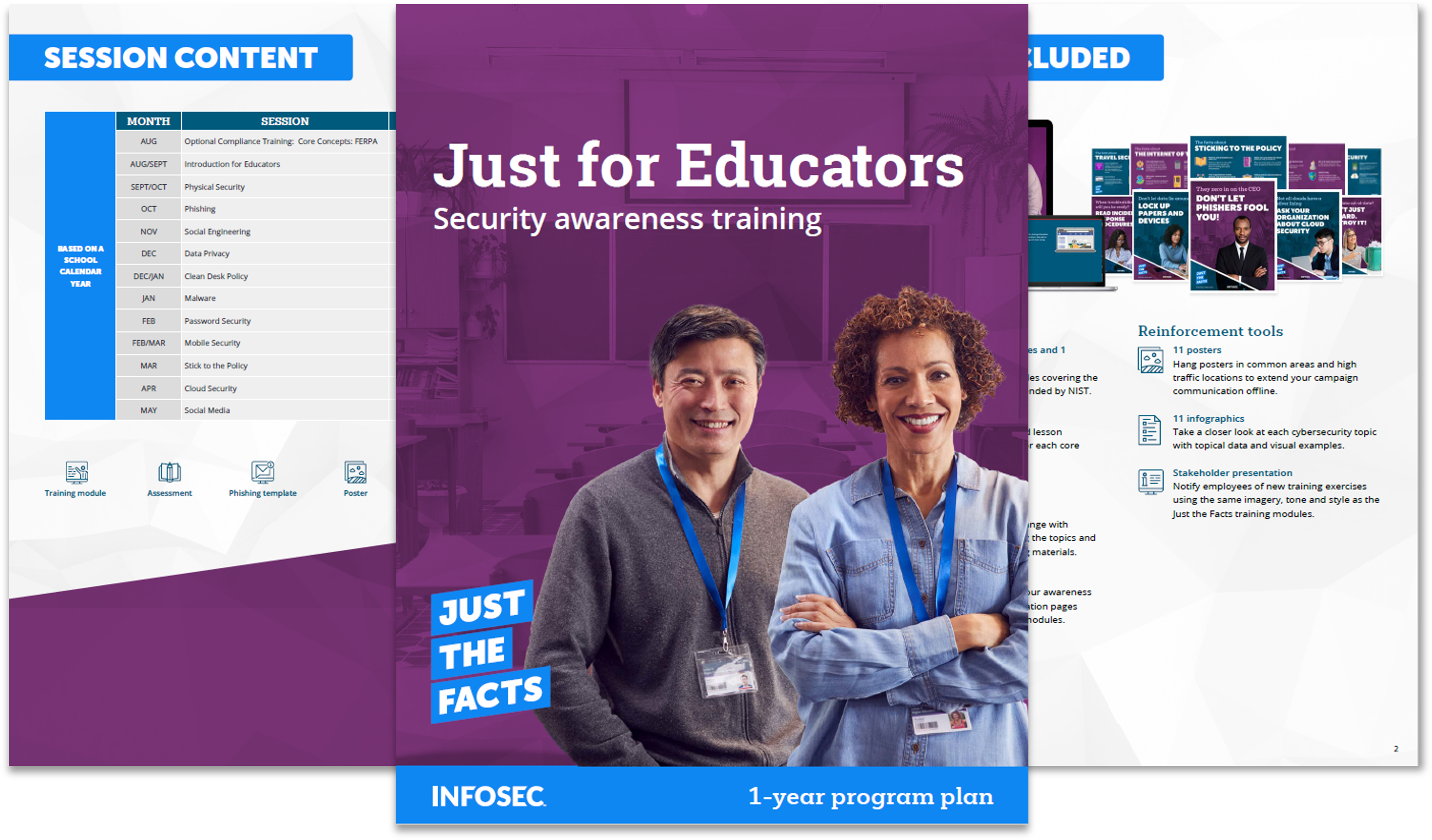
Free Security Awareness Toolkit for Educators
To learn more:
- Download our free Security Awareness Toolkit for Educators, which includes a 1-year sample training plan
- Speak to someone at Infosec to learn how we can help make your campus community more cyber secure
Author Details

Ellen Pincus